Questions
When is the next total solar eclipse?
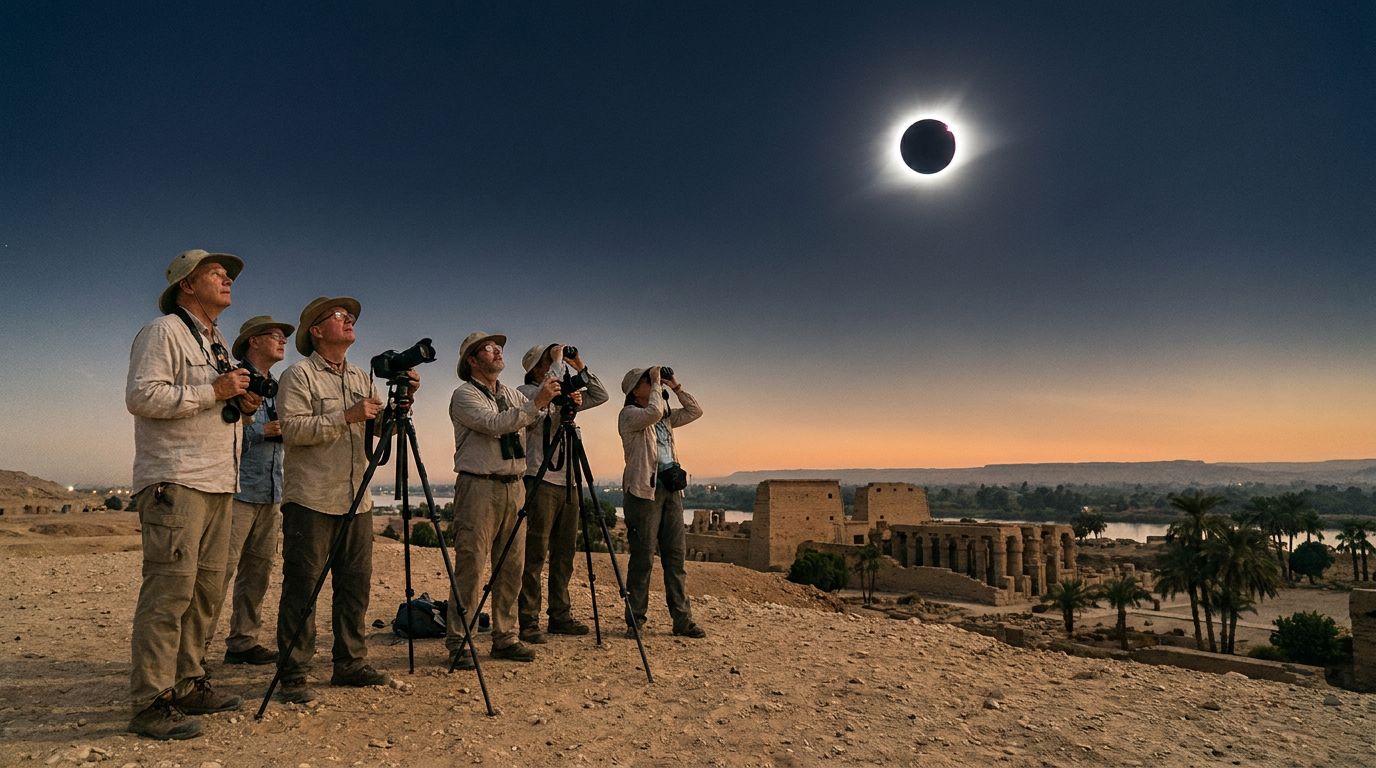
After the 12 August 2026 eclipse over Iceland and Spain, the next total solar eclipse is on 2 August 2027. Totality crosses southern Spain, Gibraltar, Morocco, Algeria, Tunisia, Libya, Egypt, Saudi Arabia, Yemen and Somalia, lasting up to 6 minutes 23 seconds near Luxor (NASA/GSFC).
Which eclipse is worth travelling for?
For a first total eclipse, 2 August 2027 is the standout: over 6 minutes of totality in Egypt and more than 4 minutes in southern Spain and Morocco, in a season that is usually dry and sunny. On 22 July 2028 totality passes right over Sydney, and on 25 November 2030 it crosses Botswana, South Africa and Australia.
Where does the eclipse data come from?
Dates, types, durations and paths come from the NASA/GSFC eclipse predictions by Fred Espenak. Local times for any location are computed in your browser from NASA’s published Besselian elements, the same method used for NASA’s own local-circumstance tables.
Do I need special glasses for a lunar eclipse?
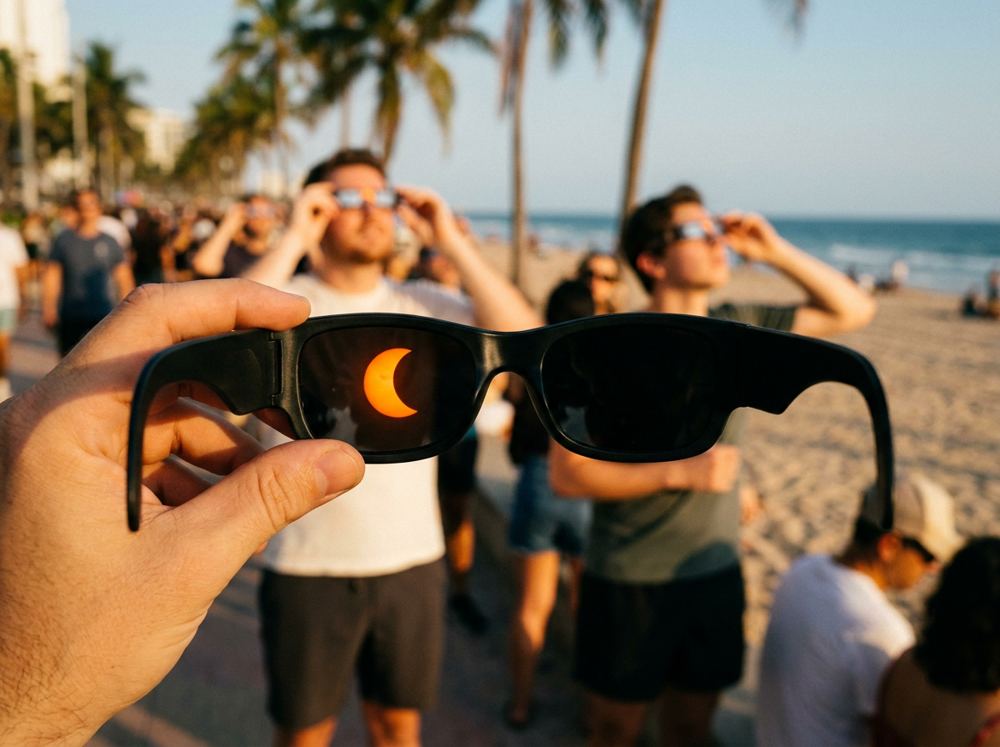
No. A lunar eclipse is safe to watch with the naked eye, binoculars or a telescope. Only solar eclipses need ISO 12312-2 eclipse glasses or a filtered viewer.